AI Agents

Google's AI Agents: The Marketing Agency Killer?
Discover how Google's Agent Development Kit (ADK) is revolutionising marketing automation with powerful multi-agent AI systems and ready-to-use templates.
 February 8th, 2026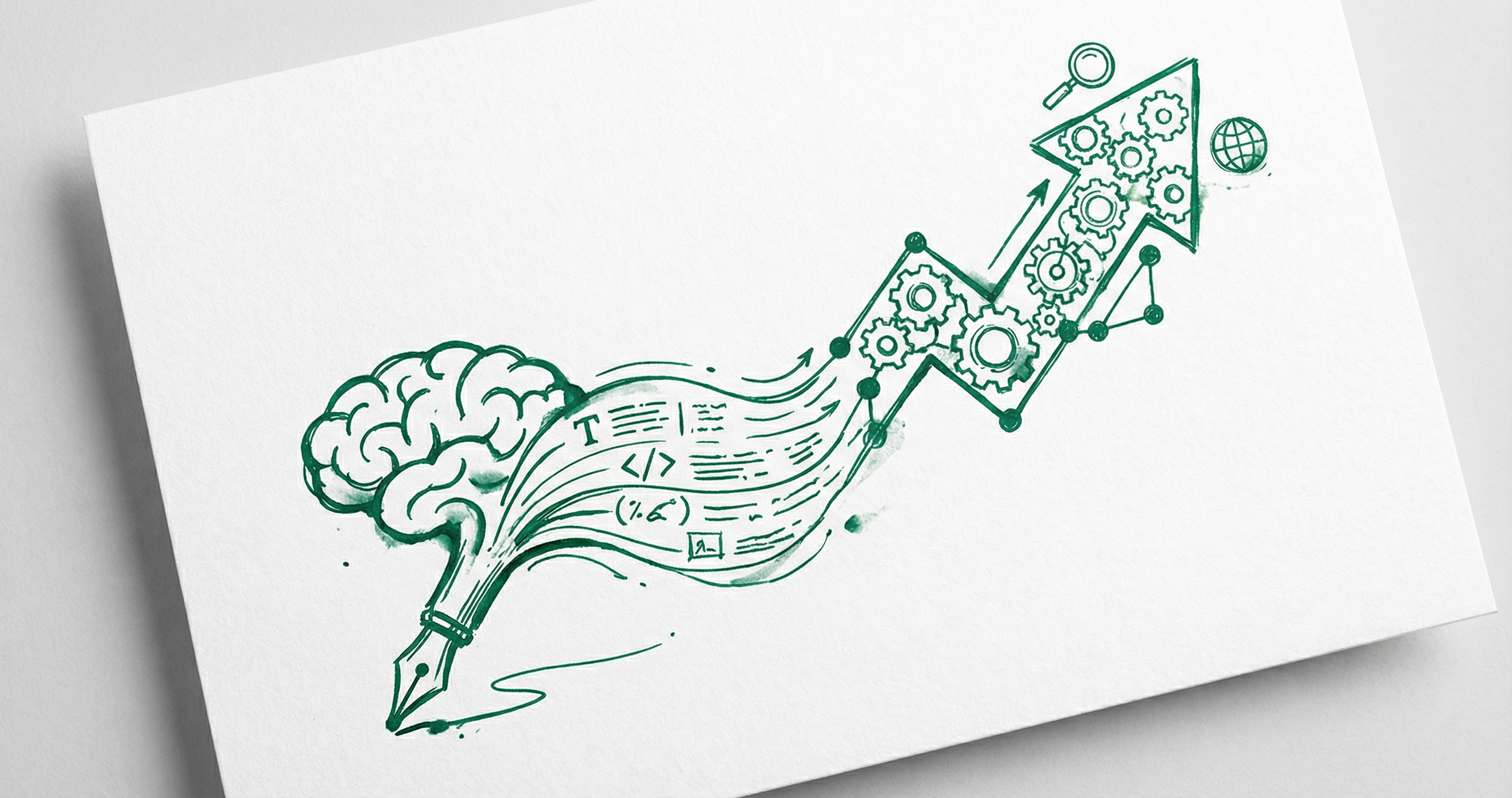
AI-assisted blog writing improves SEO by increasing publishing consistency, long-tail coverage, and content refresh speed when paired with strong human editing.
Using AI to write blogs can be a real SEO advantage when it is done properly. It helps teams publish more consistently, cover more useful topics, and reduce production bottlenecks. But the value comes from combining AI speed with human editing, not publishing raw drafts.
Search engines reward websites that keep publishing useful, relevant content. Many businesses struggle with this because writing takes time and content often gets pushed down the priority list. AI helps remove that bottleneck, which makes a consistent publishing schedule much easier to maintain.
AI can speed up topic research, outline generation, and first drafts. That shortens the path from idea to published post. Your team can then focus on editing for clarity, accuracy, and brand voice, which is where quality is actually created. In practice, this means faster output without sacrificing standards.
Most organic traffic growth comes from many specific search terms, not one broad keyword. AI makes it easier to build content around those long tail queries at scale. You can create focused posts that answer real questions your audience is asking, which improves topical depth and keyword coverage over time.
Well-structured blog posts are easier for users to read and easier for search engines to interpret. AI can help produce clean heading structure, concise paragraphs, and clearer section flow. When readers can scan and find answers quickly, engagement usually improves, and that supports stronger SEO performance over time.
SEO is not only about creating new articles. Updating older pages is often one of the fastest ways to recover or improve rankings. AI can help rewrite outdated sections, improve clarity, and align content with current search intent. This keeps existing assets useful instead of letting them decay.
AI can draft quickly, but it cannot replace judgement. Human review is still needed for fact checking, examples, tone, and strategic positioning. The strongest SEO content combines AI for speed and humans for quality control. That balance is what makes the output reliable and competitive.
A simple workflow works best: choose a keyword cluster, create outlines with AI, draft the article, edit for quality, add internal links, and publish on a clear cadence. Then review performance and refresh high-value posts regularly. This gives your team a repeatable system instead of ad hoc content production.
AI writing is beneficial for SEO because it helps businesses publish consistently and cover more relevant search demand. If your process includes strong editing and clear strategy, AI becomes a practical multiplier for organic growth rather than a shortcut that weakens quality.
Discover how Google's Agent Development Kit (ADK) is revolutionising marketing automation with powerful multi-agent AI systems and ready-to-use templates.
February 8th, 2026
A practical guide to five high-impact ways businesses can use AI to save time, improve consistency, and drive growth.
March 4th, 2026
How I use OpenClaw to reduce context switching, improve handoffs, and free up teams for high-value work.
March 2nd, 2026